

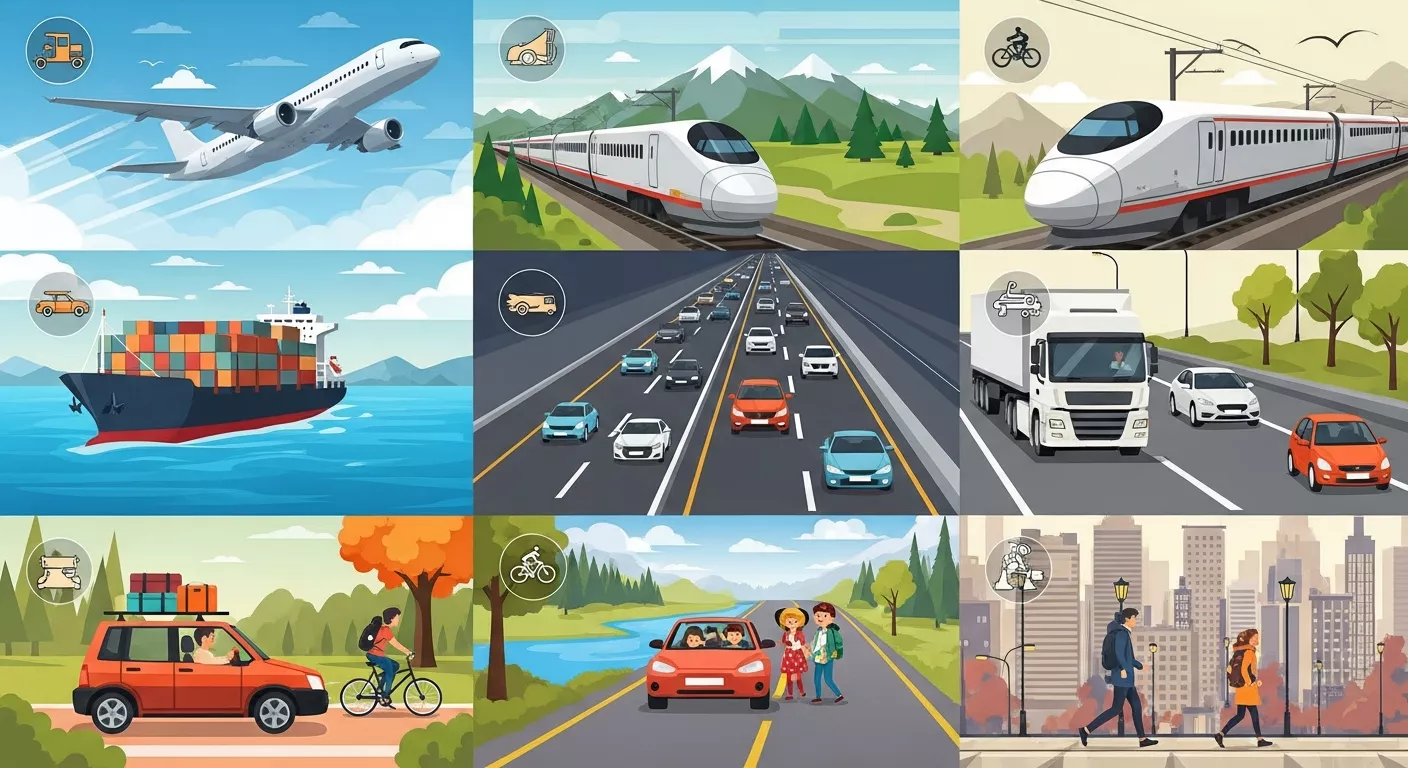
Choosing the right transport mode depends on cost, speed, distance, cargo type, and risk. Road, rail, air, and sea each offer unique benefits. Smart logistics planning, supported by warehousing, technology, and risk management, improves efficiency and supply chain performance.
Moving goods or people from point A to point B sounds simple enough. The reality is far more complex. Selecting the ideal transport mode requires balancing multiple competing factors, from tight budgets and strict deadlines to environmental goals and geographical hurdles.
Make the wrong choice, and you risk delayed shipments, frustrated clients, or blown budgets. Make the right choice, and you optimize your supply chain, reduce overhead costs, and build a reputation for reliability.
Key Factors to Consider Before Moving Freight
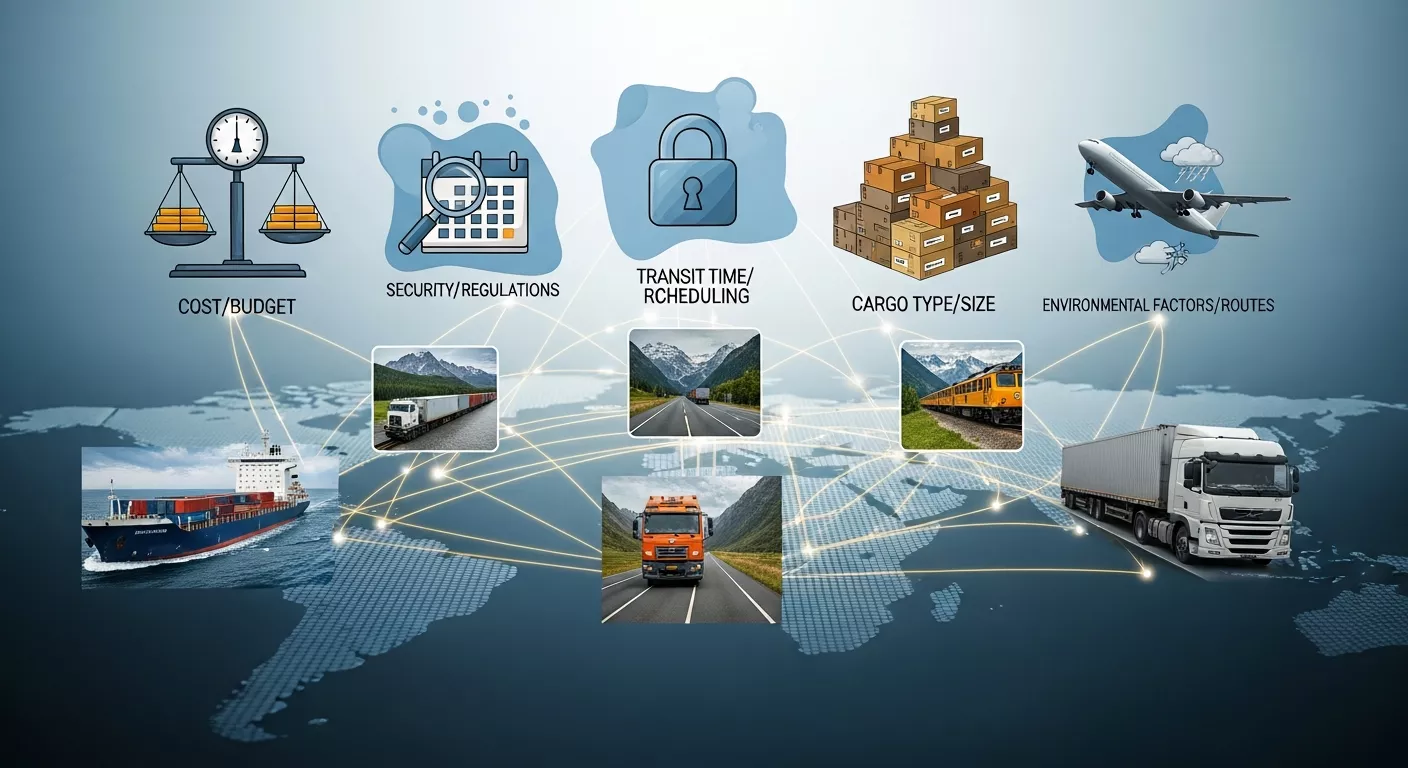
Every logistics decision starts with a thorough assessment of your specific needs. No single mode of transport works for every scenario. You must weigh several critical variables before booking a carrier.
Distance and Geography
The physical route dictates your options immediately. Moving goods across a single state heavily favors trucks. Shipping a massive volume of electronics from Asia to North America requires ocean freight or cargo planes. Consider the infrastructure at both the origin and the destination. A remote warehouse might only be accessible by local roads, requiring a truck for the final mile regardless of how the goods traveled most of the way.
Budget Constraints
Cost is often the deciding factor for businesses. Ocean shipping is famously economical for large volumes, while air freight commands a massive premium. However, base freight rates do not tell the whole story. You must account for insurance, warehousing, customs duties, and the cost of tying up capital while goods are in transit. A cheaper, slower transport mode might actually cost you more if it delays a product launch or leads to stockouts.
Speed and Urgency
How fast do you need your items to arrive? Medical supplies and perishable goods often demand the rapid transit times of air freight. Bulk raw materials like coal or grain can easily spend weeks on a cargo ship or freight train. You must align your transportation choice with your customer’s expectations and your inventory management strategy.
Characteristics of the Goods
Fragile, hazardous, or perishable items restrict your transportation choices. Delicate electronics require smooth handling and climate control, often ruling out certain types of rail or sea transport. Hazardous materials face strict regulatory hurdles, meaning you must find carriers certified to handle your specific class of goods. Always match the physical requirements of your freight to the capabilities of the transport mode.
Breaking Down the Main Modes of Transport
Understanding the strengths and weaknesses of each transportation method is crucial for optimizing your supply chain.
Road Transportation: Unmatched Flexibility
Trucks are the backbone of domestic logistics. They offer door-to-door service, meaning goods rarely need to be transferred between different vehicles. This reduces the risk of damage and speeds up local deliveries. Road transport is ideal for short to medium distances and offers incredible scheduling flexibility. However, it is highly susceptible to traffic congestion, weather delays, and fluctuating fuel prices.
Rail Transportation: Heavy Lifting
Trains excel at moving massive quantities of heavy, bulky goods over long distances overland. Once loaded, a freight train operates continuously, making it highly efficient. It is also significantly more fuel-efficient than road transport, offering a lower carbon footprint per ton-mile. The main drawback is a lack of flexibility. Trains run on fixed schedules and fixed routes, meaning you will almost always need trucks to handle the first and final miles of the journey.
Air Freight: Unbeatable Speed
When time is your most critical resource, air freight is the answer. Cargo planes can move goods across the globe in a matter of hours. This mode is perfect for high-value, low-weight items like pharmaceuticals, fashion apparel, or urgent replacement parts. The trade-off is cost. Air transport is exponentially more expensive than any other mode. It also carries strict size and weight limitations, making it unsuitable for bulky cargo.
Maritime Shipping: The Global Standard
Ocean freight handles the vast majority of international trade. It is incredibly cost-effective for large shipments and can handle heavy equipment, bulk commodities, and thousands of shipping containers at once. Ships are the workhorses of global commerce. Yet, they are painfully slow. A journey across the Pacific can take nearly a month, and port congestion can add weeks to your delivery timeline.
Warehousing and Storage Strategy in Logistics
Warehousing plays a critical role in transportation planning by acting as the bridge between production and delivery. Proper storage ensures that goods are protected, organized, and ready for dispatch through the most efficient transport mode. Businesses often use regional warehouses to reduce last-mile delivery time and lower shipping costs. Strategically placed warehouses near ports, airports, or highways allow faster transfers between transport modes, improving overall supply chain speed.
Inventory management within warehouses also impacts transportation decisions. High-demand products may require frequent small shipments, while bulk goods can be stored and shipped in larger consolidated loads to reduce the cost per unit. Temperature-controlled warehousing is essential for perishable or sensitive goods, ensuring they remain suitable for transport regardless of delays. Efficient warehousing not only reduces operational waste but also enables smarter selection of road, rail, air, or sea transport depending on demand patterns and urgency.
Last-Mile Delivery Optimization
Last-mile delivery is the final and often most expensive stage of the logistics process, where goods are transported from a distribution hub to the end customer. Choosing the right transport mode for this stage is essential for customer satisfaction and cost control. Typically, road transport dominates last-mile delivery due to its flexibility and ability to reach residential or remote locations efficiently.
Modern logistics companies increasingly use route optimization software to reduce fuel consumption and delivery time. Smaller vehicles such as vans, motorcycles, or even bicycles are used in dense urban areas to avoid traffic congestion. In some regions, delivery lockers and pickup points are used to reduce repeated delivery attempts.
Last-mile efficiency directly influences customer experience, especially in e-commerce. A well-planned system ensures timely delivery, reduces operational costs, and minimizes environmental impact by reducing unnecessary travel distance and fuel usage. Learn more about Travel Guide
Risk Management and Cargo Insurance
Risk management is a vital part of selecting transportation modes because goods in transit face multiple uncertainties, such as theft, damage, accidents, and natural disasters. Cargo insurance provides financial protection against these risks, ensuring businesses do not suffer major losses during transportation.
Different transport modes carry different risk levels. Air freight is generally safer but expensive, while sea freight carries a higher exposure to delays, weather disruptions, and port handling risks. Road transport may face theft or traffic-related delays depending on the region.
Companies often conduct risk assessments before choosing a transport method, evaluating factors like route safety, carrier reliability, and geopolitical conditions. Insurance policies are tailored based on these risks, covering full or partial cargo value. Strong risk management strategies not only protect financial assets but also improve supply chain reliability and customer trust by ensuring consistent delivery performance.
Digital Transformation in Transportation Planning
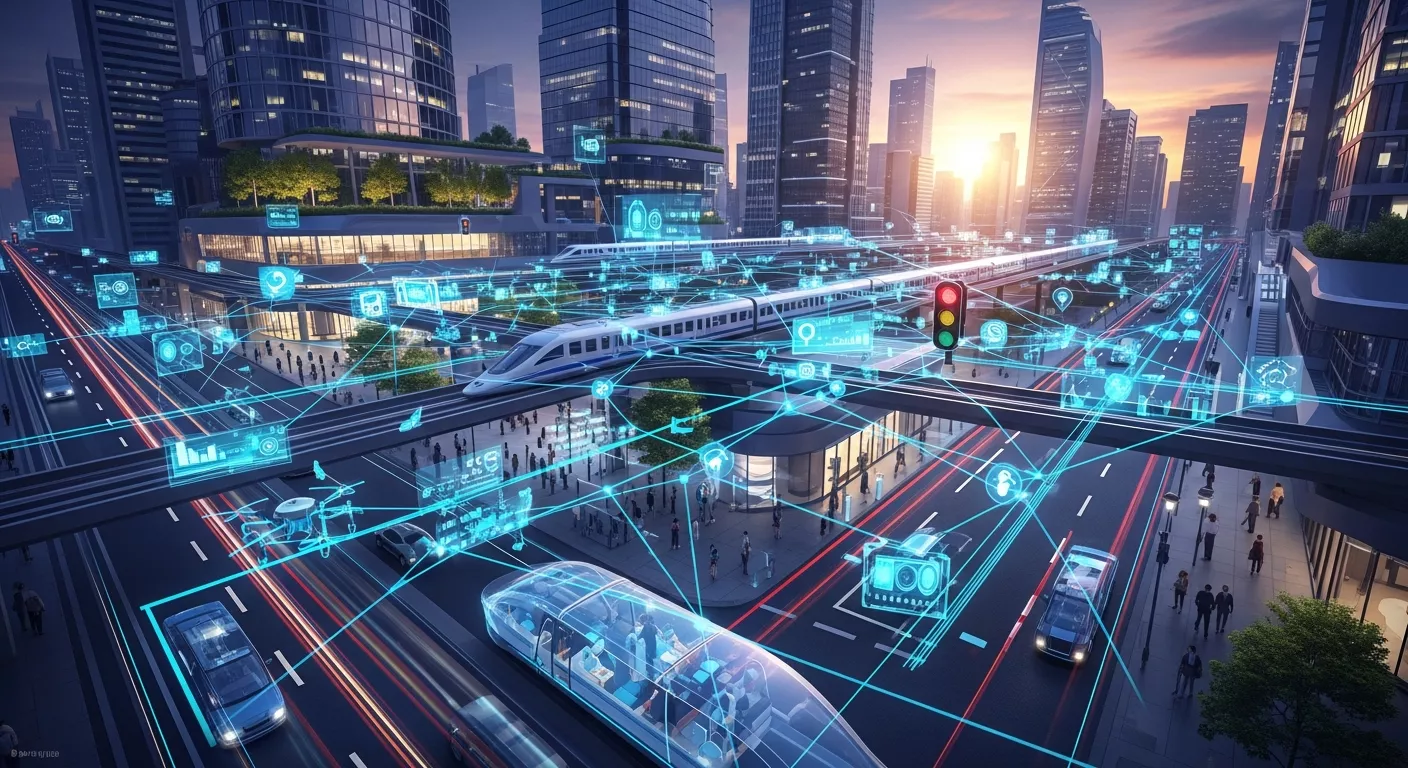
Technology is transforming how businesses choose transportation modes by making logistics more data-driven and efficient. Transportation Management Systems (TMS) allow companies to compare carriers, analyze costs, and select optimal routes in real time. These systems integrate with GPS tracking to provide live updates on shipment location and estimated delivery times.
Artificial intelligence and predictive analytics are increasingly used to forecast demand, weather disruptions, and port congestion. This allows companies to proactively switch transportation modes before delays occur. For example, shifting from sea to air freight during urgent demand spikes can prevent stock shortages.
Blockchain technology is also improving transparency in global shipping by securely recording transactions and shipment history. Digital tools reduce human error, improve coordination between logistics partners, and enhance decision-making. As a result, businesses can build faster, smarter, and more resilient supply chains in a highly competitive global market.
Frequently Asked Questions (FAQ)
Navigating logistics can be challenging. Here are ten detailed answers to the most common questions about selecting a transportation mode.
1. How do I balance cost and speed in logistics?
Balancing cost and speed requires a deep understanding of your inventory cycles and customer demands. If you hold high inventory levels, you can utilize slower, cheaper methods like ocean or rail freight without risking stockouts. If you run a lean, just-in-time inventory system, you must rely on faster, more expensive modes like air or expedited road freight. Many businesses use a blended approach, shipping the bulk of their goods via ocean while using air freight for urgent restocks.
2. What is intermodal transportation?
Intermodal transportation involves using two or more different modes of transport to move a single shipment, without directly handling the freight itself when changing modes. A standard shipping container might be loaded onto a truck at a factory, transferred to a train for a cross-country journey, and then loaded onto a ship. This strategy leverages the specific efficiencies of different modes, optimizing both cost and speed while keeping the cargo secure inside the container.
3. Why is rail transport considered environmentally friendly?
Trains are incredibly efficient at hauling heavy loads over long distances. A single freight train can carry the equivalent load of hundreds of trucks. Because of this scale, rail transport uses significantly less fuel per ton-mile than road transport, resulting in much lower greenhouse gas emissions. For companies looking to reduce their corporate carbon footprint, shifting long-haul freight from trucks to trains is a highly effective strategy.
4. When should I absolutely use air freight?
Air freight becomes necessary under a few specific conditions. First, if the goods are highly perishable and have a short shelf life, such as fresh seafood or cut flowers. Second, if the goods are high-value and lightweight, like microchips, where the high shipping cost is a small fraction of the product’s total value. Finally, air freight is essential for emergencies, such as shipping urgent medical supplies or critical machine parts needed to prevent a factory shutdown.
5. How does weather affect maritime shipping?
Ocean transport is highly vulnerable to severe weather. Hurricanes, typhoons, and rough seas can force ships to reroute or delay departures, adding days or weeks to a transit schedule. Extreme weather can also cause port closures, leading to massive backlogs of cargo. While modern ships are built to withstand harsh conditions, the safety of the crew and the cargo takes precedence, making weather a major variable in ocean logistics planning.
6. What are the hidden costs of road transportation?
While getting a quote for trucking seems straightforward, several hidden costs can inflate your final bill. Tolls, fuel surcharges, and weigh station fees add up quickly. Detention charges—fees incurred if a driver is kept waiting at a loading dock longer than agreed—can be shockingly expensive. Furthermore, if the truck breaks down or hits severe traffic, the resulting delay can cost you money in lost sales or unhappy customers.
7. Can I use multiple modes of transport for a single shipment?
Yes. In fact, most international shipments require multiple modes. This is known as multimodal or intermodal transportation. A factory in mainland China might use a truck to send goods to a rail terminal, a train to move them to a major port, a ship to cross the ocean, and another truck to deliver the goods to a retail warehouse in Europe. Coordinating these handoffs is complex, which is why many companies hire third-party logistics (3PL) providers to manage the process.
8. How do customs regulations impact transportation mode choice?
Different transportation modes often face different customs procedures. Airports generally have highly streamlined customs clearance processes designed for speed, aligning with the urgency of air freight. Seaports, handling massive volumes of complex cargo, can have much slower and more bureaucratic customs processes. If you are shipping goods that face strict regulatory scrutiny, routing them through a port known for severe bottlenecks could result in massive delays.
9. What role does technology play in choosing transportation?
Modern logistics relies heavily on technology. Transportation Management Systems (TMS) use algorithms to analyze shipping data, carrier rates, and route efficiency to recommend the optimal transport mode. Real-time GPS tracking allows companies to monitor shipments continuously. Predictive analytics can even forecast weather disruptions or port congestion, allowing shippers to proactively switch transportation modes before a delay occurs.
10. How do I calculate the carbon footprint of my shipment?
Calculating a shipment’s carbon footprint involves multiplying the weight of the freight by the distance traveled, and then applying an emissions factor specific to the transportation mode. The Global Logistics Emissions Council (GLEC) Framework provides standardized methodologies for this. Generally, air freight produces the highest emissions per ton-mile, followed by road, rail, and finally, ocean freight. Many modern shipping platforms now automatically calculate and display these estimated emissions during the booking process.
Make Your Logistics Strategy a Competitive Advantage
Selecting the right mode of transportation is not just an operational necessity. It is a strategic lever you can pull to outpace your competitors. By carefully analyzing your product characteristics, understanding your budget limitations, and anticipating your customers’ needs, you can build a highly resilient supply chain.
Review your current shipping practices this week. Look for opportunities to consolidate loads, shift non-urgent freight to more economical modes, or leverage intermodal networks to reduce your environmental impact. Smart transportation choices protect your bottom line and ensure your business keeps moving forward.
