

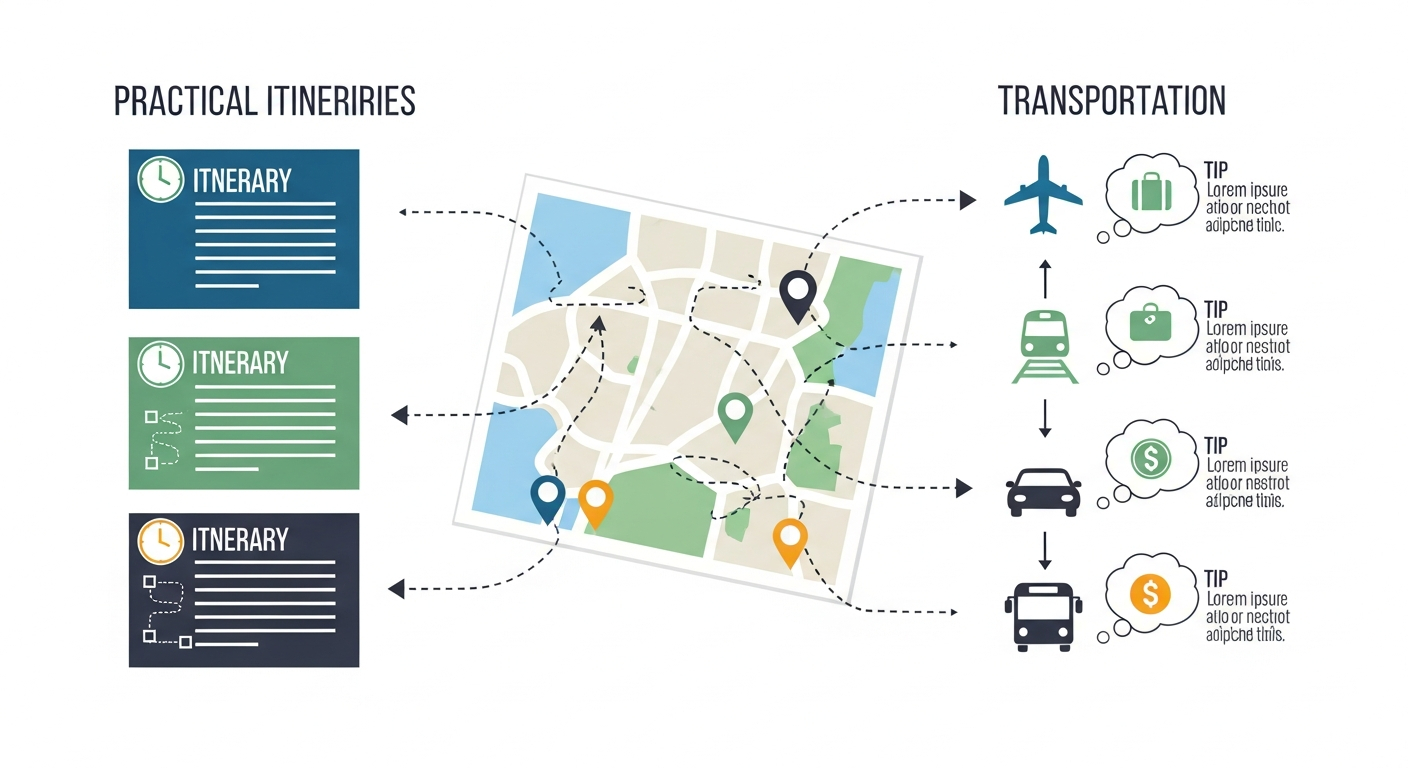
This guide explains how practical itineraries and transportation planning improve travel experiences by reducing stress, saving time, and increasing efficiency. It covers step-by-step itinerary building, transport choices, budgeting tips, travel flow design, and smart strategies for smoother journeys.
Travel often looks effortless from the outside. You see beautiful photos, smooth airport arrivals, scenic train rides, and perfectly timed day trips. In reality, the trips that feel easiest are usually the ones that were planned carefully. The most enjoyable journeys are rarely the most spontaneous ones. They are the ones where the traveller understood how to build a realistic itinerary, how to move through each destination efficiently, and how to avoid the small mistakes that waste time and energy.
That is why practical itineraries and transportation tips matter so much.
Many travelers focus heavily on choosing destinations, hotels, and activities, but they treat transportation as an afterthought. They assume they can figure it out later. Then they arrive in a city and discover that attractions are farther apart than expected, traffic is worse than anticipated, public transit is confusing, or ride-hailing prices spike at the worst possible moments. Even the most exciting trip can become frustrating when movement between places is poorly planned.
A practical itinerary solves that problem. It gives your trip structure without making it feel rigid. It helps you estimate how much you can actually do in a day, how long transfers will take, where to stay, and when to leave one place for another. Transportation planning makes that itinerary work in real life. Together, the two create a travel experience that feels smooth, efficient, and enjoyable.b
By the end, you will know how to design trips that are practical, flexible, and realistic, with transportation choices that support your schedule instead of disrupting it.
Why Itineraries and Transportation Planning Matter More Than Most Travelers Realize
A travel itinerary is more than a list of places to visit. It is a decision-making tool. It helps you answer important questions before they become problems on the road. How far apart are your attractions? How much time will transit take? When should you leave your hotel? Which neighbourhood should you stay in? Which part of the day is best for certain experiences? Without answers to these questions, even a well-funded trip can feel rushed and disorganized.
Transportation plays a major role in this because travel time is often the hidden cost of every itinerary. A destination may look close on a map, but that does not always mean it is easy to reach. A train may be efficient in one city and useless in another. A short taxi ride may become expensive if traffic is heavy. A scenic attraction may require a long transfer that affects the rest of the day. Understanding these realities helps you make better choices before you travel.
The best itineraries balance ambition with realism. They allow you to see meaningful things without turning your trip into a race. They also leave room for meals, rest, delays, and unplanned discoveries. Good transportation planning supports that balance by making transitions predictable and manageable.
When these two parts work together, travel becomes less stressful and more enjoyable. You spend more time experiencing the destination and less time trying to recover from bad planning. Learn more about Ultimate Bali Travel Guide.
The Foundation of a Practical Itinerary
A practical itinerary is one that fits the actual rhythm of travel. It accounts for distance, pace, rest, transportation, opening hours, and the traveler’s energy level. It is not built to impress anyone. It is built to work.
The foundation of a strong itinerary begins with clarity. You need to know why you are traveling and what kind of experience you want. Some trips are about relaxation. Some are about sightseeing. Others focus on food, culture, adventure, shopping, nature, or a specific event. The purpose of the trip determines how structured the itinerary should be.
A traveler who wants a relaxing break should not build a schedule with six attractions a day. A traveler trying to see a new city in a short weekend may need a tighter schedule. Someone on a road trip will need more attention to driving time and fuel stops. A family with children will need a slower pace and more buffer time. Practical itineraries respect the nature of the trip instead of forcing every trip into the same format.
The second part of the foundation is location. One of the most common planning mistakes is choosing activities that are interesting individually but inefficient together. If your hotel is in one neighborhood and your attractions are scattered across three others, you may spend much of the day in transit. A better plan groups places by area, saving time and reducing fatigue.
The third part is pacing. It is tempting to fill every hour of the day, especially if your time is limited. But full schedules often collapse under real-world conditions. Traffic can be slow, lines can be long, and meals can take longer than expected. A practical itinerary keeps enough space between activities to absorb small delays.
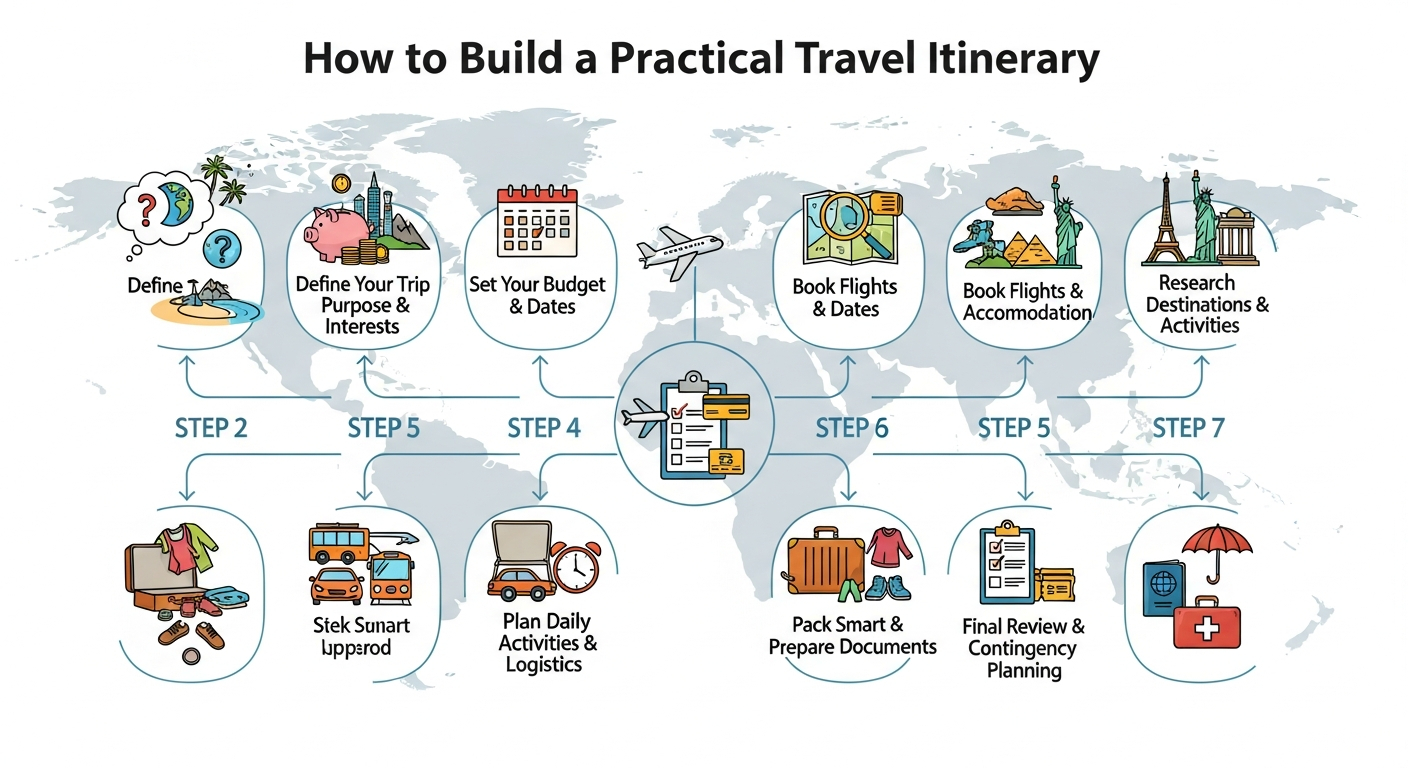
How to Build a Practical Travel Itinerary Step by Step
1. Start with your trip goal
Before you list attractions, decide what kind of experience you want. Ask yourself whether your trip should be active or restful, structured or flexible, focused on major highlights or on local exploration. A clear goal makes every later decision easier.
2. Research your destination thoroughly
Do not rely only on photos or short blog posts. Look into neighbourhood layouts, transit systems, weather patterns, attraction hours, seasonal crowds, and average travel times. Learn where the major clusters of activities are located. Find out whether the city is walkable or transport-heavy. Researching the destination early helps you build a realistic plan instead of guessing.
3. Group activities by geography
The smartest itineraries are organized by location. If several attractions are in the same district, visit them on the same day. This reduces backtracking and makes the day feel more efficient. If you have a museum, a nearby park, and a restaurant in one area, those can fit naturally into one route.
4. Estimate time honestly
Travelers often underestimate how long everything takes. They assume a museum visit will take one hour and end up staying two. They assume lunch will be quick and discover a long wait. They assume a short transfer will be easy and encounter traffic. Build your itinerary using realistic time estimates rather than ideal ones.
5. Limit the number of major activities
A practical itinerary usually includes two or three major activities in a day, not six. Smaller optional stops can be added if time allows. The fewer major transitions you make, the more comfortable the trip will feel.
6. Add buffer time
Buffer time protects your itinerary. It covers late departures, transit delays, photo stops, bathroom breaks, and simple human fatigue. Without it, one small delay can throw off the entire day. A practical itinerary always includes extra time between plans.
7. Build around meals and rest
People need to eat and recover. Meals are not interruptions to the itinerary; they are part of it. Good planning includes enough time for breakfast, lunch, dinner, coffee breaks, and short rests. This keeps the trip from becoming exhausting.
8. Leave room for one flexible slot
A practical itinerary is organized but not brittle. Leaving one open slot per day or per trip allows for spontaneous discoveries, weather changes, or simple mood shifts. Flexibility makes the trip more enjoyable.
Understanding Different Types of Itineraries
Not every traveller needs the same style of planning. Different trips benefit from different levels of structure.
Structured itineraries
Structured itineraries have exact timing and mostly fixed plans. They work well for short trips, business travel, group tours, and destinations where reservations matter. They reduce uncertainty and help travellers use their limited time efficiently. However, they can feel strict if too much is packed into the day.
Flexible itineraries
Flexible itineraries provide a loose outline rather than fixed times. They work best for relaxed vacations, longer stays, and destinations where exploration is part of the fun. These itineraries are good for travellers who value freedom and spontaneity.
Hybrid itineraries
Hybrid itineraries combine structure and flexibility. This is often the best option for real-world travel. The traveller may book key attractions and transport in advance, then leave some portions open. Hybrid planning gives you direction without overcontrolling the trip.
Theme-based itineraries
Theme-based itineraries revolve around a specific interest such as food, art, shopping, wellness, adventure, or photography. They are especially useful because they make the trip feel cohesive. A theme helps guide both your attraction choices and your transportation decisions.
Transportation as the Hidden Engine of Travel
Transportation is often the most underestimated part of a trip. Many travelers think of it only in terms of getting from one place to another. In reality, transportation shapes the entire flow of the journey.
The mode you choose affects how much you can see, where you stay, how early you leave, how tired you feel, and how much you spend. It also influences the mood of the trip. A smooth metro ride can make a city feel easy and approachable. A stressful series of transfers can make even a beautiful destination feel draining.
Smart transportation planning begins with understanding the options available at your destination and matching them to your schedule, budget, and comfort level.
Common Transportation Options for Travelers
Walking
Walking is one of the best travel tools available. It is free, flexible, and often the fastest way to explore dense urban areas. Walking allows you to notice details, discover side streets, and stay connected to the atmosphere of a place. It works especially well when attractions are clustered together.
However, walking is only practical when distances are reasonable and weather conditions are manageable. It should be part of many itineraries, but not always the only transportation method.
Public transportation
Buses, trains, subways, trams, and ferries can make travel efficient and affordable. Public transportation is often ideal for cities with strong infrastructure. It can help you avoid parking problems, reduce travel costs, and move quickly through traffic-heavy areas.
The main challenge is learning the system. Travelers need to understand routes, schedules, payment methods, and transfer points. Once that is figured out, public transit can become one of the smartest travel choices available.
Ride-hailing services
Ride-hailing is convenient because it reduces planning complexity. You can request a car quickly and avoid learning a local transport system immediately. It is especially useful for late arrivals, luggage-heavy transfers, or short distances where public transit is not ideal.
The downside is cost. Ride-hailing becomes expensive when used repeatedly or during peak demand. It is best used strategically rather than as the only transport option.
Taxis and private transfers
Taxis remain useful in many destinations, especially where app-based services are limited or airport transfers require reliable timing. Private transfers are often more comfortable and predictable than hailing a car on the spot. They can be a good option for families, large groups, or travellers who want less stress after a long flight.
Rental cars
Rental cars are valuable for road trips, countryside travel, and destinations where public transport is limited. They provide freedom and flexibility, especially for travellers who want to stop at multiple locations on their own schedule.
But rental cars also bring responsibilities: navigation, parking, fuel, tolls, insurance, and local driving rules. They are powerful tools, but not always the simplest choice.
Scooters and bikes
In some destinations, scooters and bicycles are excellent options for short-distance movement. They can be efficient, enjoyable, and environmentally friendly. They work best in places with safe infrastructure and manageable traffic conditions.
How to Choose the Right Transportation Mode
Choosing transportation is not just about price. It is about matching the mode to the trip’s needs.
Ask these questions:
- How far apart are the places I want to visit?
- How crowded is the destination?
- Will I be carrying luggage?
- Do I need speed, comfort, or flexibility?
- Is the area easy to navigate?
- How many transfers will I need?
The best choice may change from day to day. You might walk in a central neighborhood, use the metro for a cross-city transfer, and take a ride-hailing car late at night. Smart travelers do not commit to one method for the entire trip. They use a mix based on the situation.
Why Location Choice Affects the Entire Itinerary
Where you stay can make or break a travel plan. A central hotel or apartment can reduce transit time, lower stress, and create more freedom. If your accommodation is in the wrong location, you may spend too much of your trip in transit.
A practical itinerary begins with accommodation that supports the schedule.
For city breaks, central neighborhoods usually work best because they reduce transport dependence. For nature-focused trips, staying closer to the attraction may be more important than staying in the city center. For business travel, proximity to the venue or airport may matter most.
The right location helps you travel less and experience more.
Creating Daily Travel Flows That Work
A good itinerary is not just a list of places. It is a flow.
A flow-based itinerary considers how the day moves from one activity to another. It starts with the easiest or most time-sensitive activity and builds from there. It also considers energy levels throughout the day.
For example, mornings are often better for museums, historic sites, or outdoor attractions because crowds are lighter and energy is higher. Afternoons may work better for lunch, shopping, or indoor breaks. Evenings may be ideal for restaurants, markets, performances, or scenic views.
The goal is to create a rhythm that feels natural.
A strong daily flow might look like this:
- Morning: one major attraction
- Late morning: nearby secondary stop
- Lunch: area restaurant
- Afternoon: slower activity or rest
- Evening: market, dinner, or scenic walk
This style prevents burnout and reduces unnecessary backtracking.
Transportation Tips for City Travel
City travel usually offers many transportation choices, but that does not mean all choices are equally efficient.
Learn the transit system early
If the city has good public transportation, learn the basics before you arrive or on your first day. Know how to pay, which lines matter, and which stops are closest to your hotel and attractions.
Use maps and transit apps
Navigation apps help you understand routes, walking distances, traffic conditions, and transfer times. They are especially useful in unfamiliar places.
Travel light when possible
The easier your bag is to manage, the more transport options you can use comfortably. Heavy luggage reduces flexibility.
Avoid unnecessary transfers
If one route requires multiple transfers while another option is only slightly more expensive, the simpler option may save time and energy.
Combine walking with transit
Many city trips work best when public transportation handles the longer movement and walking handles the last stretch.
Transportation Tips for Road Trips
Road trips require a different kind of planning. You are not just choosing destinations. You are managing the journey between them.
Plan realistic driving times
Driving can be tiring, especially if traffic, terrain, or weather conditions are difficult. Never plan too many long driving segments in one day.
Include rest stops
Drivers need breaks. So do passengers. Build stops into the itinerary for food, fuel, bathroom use, and stretching.
Check road conditions in advance
Some routes may be scenic but slow. Others may be faster but less comfortable. Weather, construction, and road quality all matter.
Keep the route simple
Too many detours can make a road trip feel chaotic. A clear route with a few meaningful stops is usually better than a crowded one.
Have backup navigation
Internet connectivity may not always be reliable. Offline maps are useful, especially in remote areas.
Transportation Tips for International Travel
International travel adds more complexity because language, currency, and local rules can change how transportation works.
Research airport transfers before arrival
The first hours of a trip often set the tone for everything else. Knowing how to get from the airport to your accommodation removes a lot of stress.
Understand local transport cards or passes
Some cities use reloadable transit cards or tourist passes. These can save time and money if you plan to use public transport often.
Learn local taxi norms
In some places, taxis are metered and regulated. In others, hailing a taxi can be confusing or overpriced if you do not know the system.
Know the traffic culture
Driving style and road rules vary widely by country. If you plan to rent a vehicle, make sure you understand local expectations.
Carry offline access to addresses
If language barriers exist, having your hotel address saved in local script can help drivers and transport staff assist you.
How to Save Money on Transportation Without Making Travel Hard
Budgeting for transportation is important, but cheap is not always smart. The best savings come from reducing waste, not reducing quality at all costs.
Stay in a convenient location
A slightly more expensive hotel in a central area may save more money overall by reducing transit costs.
Use passes when they make sense
Daily or weekly passes are useful if you plan to use public transport often.
Combine errands and sightseeing
Group nearby activities so you take fewer trips.
Pre-book strategic transport
Airport transfers and intercity routes are often cheaper and less stressful when booked early.
Walk when it is efficient
Walking is still the best budget transportation method when the distance is manageable.
How to Balance Comfort and Efficiency
Travel planning often becomes a tradeoff between convenience and cost. A practical itinerary should respect both.
You do not need the most luxurious option for every transfer. At the same time, the cheapest option is not always worth the added stress.
A good rule is to reserve comfort for moments where it matters most:
- After a long flight
- When traveling with children or elderly family members
- During late-night arrivals
- For long intercity transfers
- When carrying heavy luggage
For short daytime trips in easy-to-navigate areas, a simpler and cheaper mode may work perfectly.
This balanced approach usually produces the best experience.
Planning for Different Traveler Types
Solo travelers
Solo travelers often benefit from flexible itineraries and transport choices that are easy to manage alone. Safety, simplicity, and convenience matter. Solo travel also allows for spontaneous changes, so the itinerary can be structured but adaptable.
Families
Family travel needs more rest time, fewer transitions, and transportation that is practical with children. Family itineraries should avoid overpacking the day.
Couples
Couples often prefer a mix of structure and freedom. Romantic trips benefit from scenic transport choices, pleasant walking routes, and comfortable pacing.
Older travelers
Comfort, accessibility, and low-stress logistics are especially important. Itineraries should allow enough time for movement without pressure.
Business travelers
Business trips often require precision. Transportation should be dependable, and the itinerary should leave room for meetings, delays, and recovery time.
Transportation and Timing: Why Departing Earlier Matters
One of the smartest travel habits is leaving earlier than you think is necessary.
Travelers often make the mistake of calculating only the base transit time. They forget about walking to the station, waiting for a ride, traffic, ticket lines, finding the correct platform, or simply getting lost. Departing earlier helps absorb those hidden minutes.
This is especially important when:
- Catching flights
- Reaching timed entry attractions
- Attending tours or performances
- Meeting guides or tour groups
A practical itinerary almost always includes early departure habits.
The Role of Rest in Travel Planning
Many travelers think a good itinerary is one that includes as much as possible. In reality, a good itinerary is one that leaves you feeling good enough to enjoy what you planned.
Rest improves the quality of the trip.
It helps you:
- Stay patient
- Make better decisions
- Enjoy meals
- Handle delays calmly
- Appreciate the destination more fully
Rest can be an actual nap, a café break, time in a park, or simply a slower afternoon. Without it, travel becomes more exhausting than rewarding.
How Weather Affects Itinerary and Transportation Planning
Weather can change transportation needs quickly. Rain, heat, snow, wind, or extreme humidity all affect how far people are willing to walk, how crowded transport gets, and how long transfers take.
A practical itinerary always considers the season and forecast. Outdoor activities should be placed in the most weather-friendly parts of the day. Backup indoor options are also useful.
If the weather is unpredictable, avoid packing too many outdoor activities into one day. Transportation should also be adjusted to reduce discomfort. In bad weather, a taxi or ride-hailing service may be worth the extra cost.
Technology That Makes Travel Planning Easier
Modern travel planning is much easier thanks to technology. Many tools help travelers organize routes, compare transportation options, and manage schedules.
Useful digital tools include:
- Navigation apps
- Public transit apps
- Ride-sharing apps
- Map planning tools
- Offline travel maps
- Budget trackers
- Trip planners
- Weather apps
These tools reduce uncertainty and help you react quickly when plans change.
Common Mistakes Travelers Make With Itineraries
Packing too much into one day
This is one of the most frequent travel mistakes. The result is stress, delays, and disappointment.
Ignoring distance between activities
Two attractions that look close on a list may require significant travel time.
Staying too far from the action
An inexpensive hotel that is far from everything can end up costing more in transportation.
Forgetting meal and rest breaks
A full itinerary without breaks quickly becomes tiring.
Not having backup options
Closed attractions or bad weather can disrupt plans. Backup choices keep the trip moving.
Underestimating transport complexity
A city may appear simple until you actually navigate it.
Building Better Itineraries for Multi-Day Trips
Longer trips require different planning than short trips. The first few days should not be overloaded. A tired traveler makes poor decisions.
A strong multi-day itinerary usually follows a rhythm:
- Day 1: arrival and light exploration
- Day 2: major attractions
- Day 3: deeper neighborhood or theme-based exploration
- Day 4: relaxed activity or day trip
- Final day: flexible wrap-up and departure preparation
This structure reduces fatigue and keeps the trip sustainable.
Sample Framework for a Practical City Itinerary
Here is a simple way to think about a one-day city plan:
- Morning: one main cultural attraction
- Late morning: nearby café or neighborhood walk
- Lunch: central location close to afternoon activity
- Afternoon: second attraction or shopping area
- Evening: scenic dinner or local market
This kind of itinerary feels full without being exhausting.
The key is not the number of places. The key is the efficiency of movement and the quality of the experience.
Sample Framework for a Practical Road Trip Itinerary
A road trip itinerary should focus on manageable segments.
- Start early
- Break the drive into sections
- Add scenic or interesting stops only where they fit naturally
- Avoid overcommitting to too many destinations in one day
- Plan overnight stays based on driving limits, not just destination appeal
This helps the trip feel enjoyable rather than like a nonstop driving task.
Sample Framework for a Practical International Trip
A simple international trip flow may look like this:
- Arrival day: transfer, check-in, rest, light nearby meal
- Day 2: major city highlights
- Day 3: local culture, market, or museum day
- Day 4: excursion or day trip
- Day 5: flexible time and departure preparation
This structure allows enough space to adapt to jet lag, new transport systems, and possible delays.
How to Make Transportation Part of the Travel Experience
Transportation does not have to feel like dead time. In many destinations, it becomes part of the experience.
A scenic train ride, a ferry crossing, a cable car, a local tram, or even a pleasant walk through a neighborhood can add value to the trip. Instead of treating travel between places as wasted time, think about whether some routes can be chosen for comfort, scenery, or cultural feel.
Sometimes the journey matters as much as the destination.
Sustainable Travel and Transportation Choices
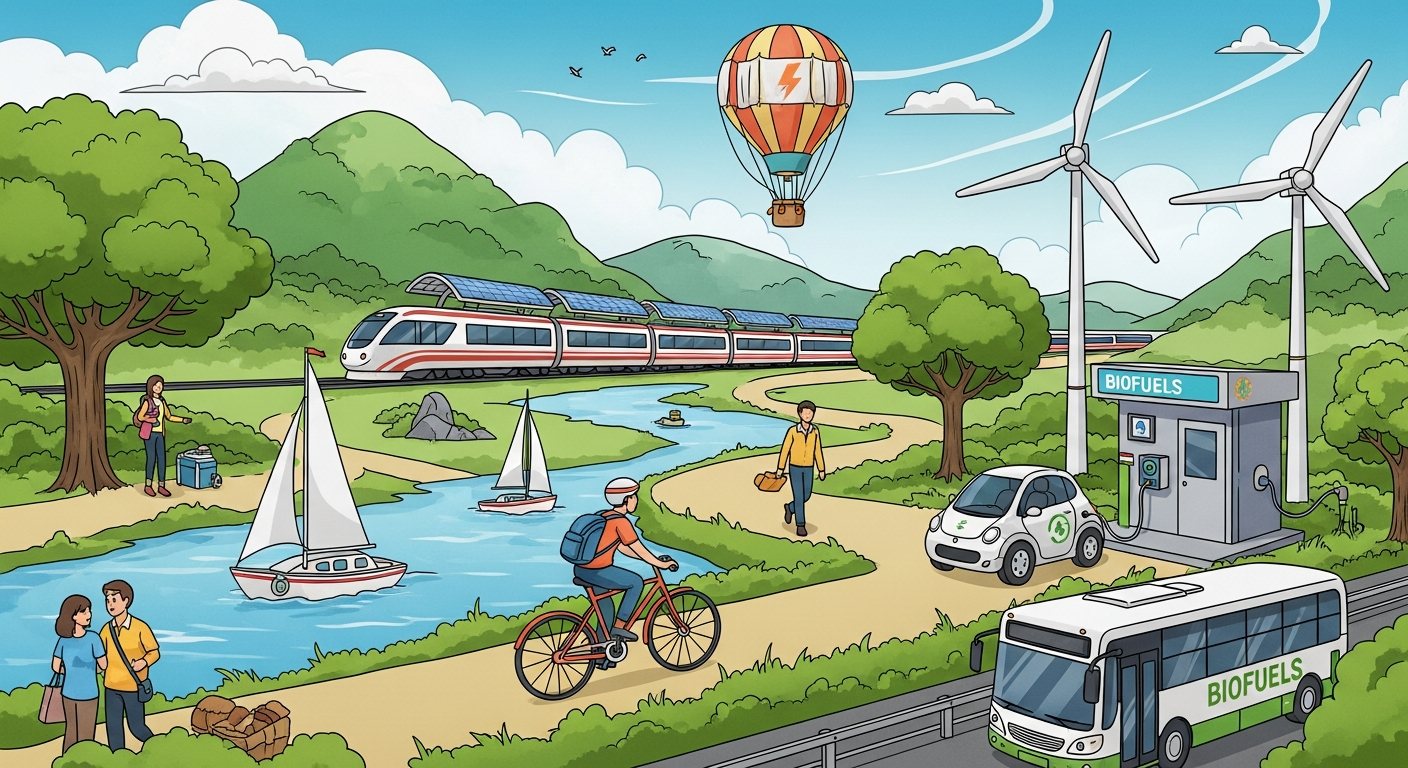
More travelers are beginning to care about environmental impact. Practical itineraries can also support sustainable travel.
Options include:
- Walking when possible
- Using public transport
- Sharing rides
- Choosing centrally located accommodation
- Combining activities to reduce unnecessary movement
Sustainable travel often overlaps with efficient travel. The same habits that reduce your footprint can also save money and lower stress.
Final Thoughts
Practical itineraries and transportation tips are the foundation of smoother, more enjoyable travel. When you plan thoughtfully, you move through destinations with more confidence and less frustration. You save time, reduce unnecessary costs, and experience more of what the trip is actually meant to offer.
A good itinerary is realistic. It respects distance, energy, weather, transit systems, and human limits. Good transportation planning supports that itinerary by making movement predictable and efficient. Together, they create trips that feel organized without feeling overcontrolled.
Travel should not feel like constant problem-solving. It should feel like discovery, ease, and memorable experiences. The more you refine your itinerary and transportation choices, the more room you create for the parts of travel that really matter: the places you see, the people you meet, and the memories you bring home.
If you plan with practicality in mind, every trip becomes better. Not just more efficient, but more enjoyable from start to finish.
FAQ
1. What is a practical travel itinerary?
A practical travel itinerary is a structured travel plan designed to match real-world conditions like travel time, distance, weather, and energy levels. It helps travelers avoid overpacking their schedule and ensures each day is balanced with activities, meals, and rest. Unlike rigid plans, it remains flexible enough to handle delays, changes, and spontaneous opportunities while keeping the trip organized and stress-free.
2. Why is transportation planning important in travel?
Transportation planning is important because it directly affects how smoothly a trip runs. Poor transport choices can lead to wasted time, higher costs, and stress. Good planning helps you choose the right mix of walking, public transport, taxis, or rentals, ensuring faster movement between attractions and more time enjoying the destination instead of dealing with logistics.
3. How many activities should be included in one day itinerary?
A practical daily itinerary usually includes two to three major activities. Adding too many attractions can cause fatigue and rushed experiences. It is better to focus on quality over quantity and leave room for meals, rest, and travel time. This balanced approach ensures travelers can fully enjoy each place without feeling overwhelmed or exhausted.
4. What is the best way to choose transportation during travel?
The best way to choose transportation is by analyzing distance, budget, comfort, and convenience. Walking works for short distances, public transport is ideal for budget travel, and ride-hailing suits quick or late-night trips. Rental cars are better for long-distance or rural areas. Smart travelers often mix multiple options depending on daily needs.
5. How can I save money on travel transportation?
You can save money by staying in central locations, using public transport passes, walking when possible, and booking long-distance transfers in advance. Combining nearby activities also reduces unnecessary trips. Avoiding overuse of taxis or ride-hailing apps helps keep costs low while maintaining efficiency and convenience.
6. What is the difference between structured and flexible itineraries?
A structured itinerary has fixed timings and detailed schedules, making it ideal for short trips or business travel. A flexible itinerary provides a loose plan with room for changes and spontaneous decisions, making it perfect for leisure or long vacations. Many travelers prefer a hybrid approach that combines both styles.
7. How does location affect travel planning?
Location plays a major role in travel efficiency. Staying in a central area reduces travel time and transportation costs, allowing easier access to attractions. If accommodation is far from main sites, travelers spend more time commuting and less time exploring. Choosing the right location improves overall trip flow and convenience.
8. What are common mistakes in itinerary planning?
Common mistakes include overpacking daily schedules, ignoring travel distance between attractions, underestimating transit time, skipping rest breaks, and not having backup plans. These errors can lead to stress and missed experiences. A realistic itinerary avoids these problems by balancing activities, travel time, and flexibility.
9. How does weather affect transportation and itineraries?
Weather can significantly impact travel plans by affecting walking distance, transport availability, and travel time. Rain or extreme heat may slow down movement or increase reliance on taxis. A good itinerary includes indoor alternatives and flexible scheduling to adapt to changing weather conditions without disrupting the entire trip.
10. What is a good example of a daily travel flow?
A balanced daily travel flow starts with one major morning attraction, followed by a nearby stop, lunch break, an afternoon activity, and a relaxed evening experience. This structure reduces travel stress, avoids backtracking, and keeps energy levels stable throughout the day, making the trip more enjoyable and efficient.
